
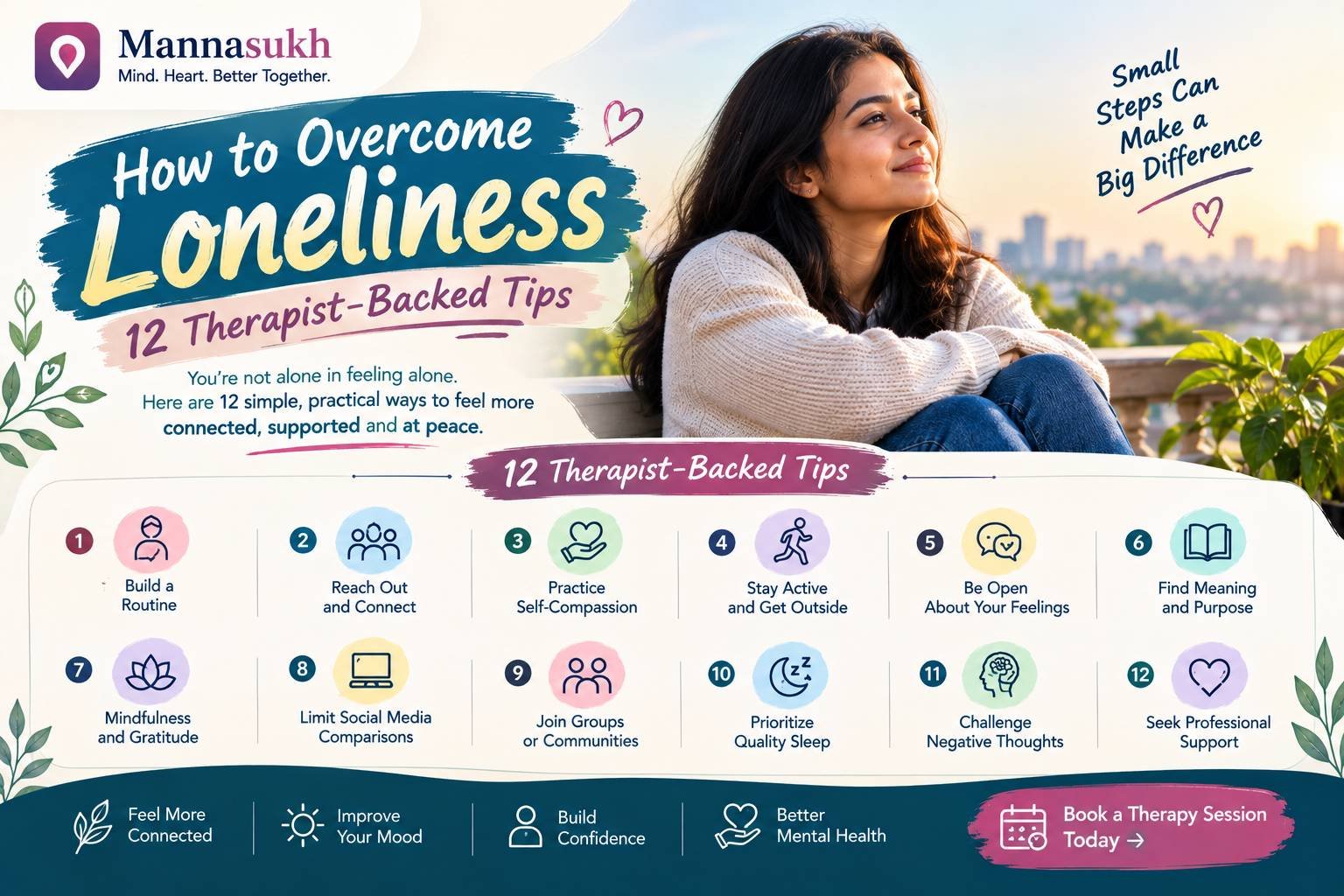
How to Overcome Loneliness: 12 Therapist-Backed Tips
Loneliness is not just a bad mood. It is a real feeling that can affect your sleep, your energy, and even your health. Being surrounded by people does not always protect you from feeling lonely. Many people experience loneliness even when they have friends, family, or coworkers around them because they miss meaningful connection, not just company.
Almost everyone feels lonely at some point, whether it is after moving to a new city, going through a breakup, or simply losing touch with old friends. The good news is that loneliness is not permanent. With the right steps, you can build stronger and more meaningful relationships over time. This guide covers how to overcome loneliness with simple, practical tips from therapists, along with a clear plan for loneliness treatment and long-term self-help.
What Causes Loneliness?
Loneliness happens when there is a gap between the connection you want and the connection you actually have. You can feel lonely even in a crowded room if the people around you do not truly know you. Common causes include moving away from family, working from home, losing a loved one, going through a divorce, or spending too much time on social media instead of real conversation. Understanding the cause is the first step in coping with loneliness in a way that actually works for you.
Starting a new job, retiring, changing schools, or taking on responsibilities that leave little time for socializing can also contribute to feelings of loneliness.
Understanding the cause is the first step in coping with loneliness because it helps you choose the kind of support or lifestyle changes most likely to be effective.
12 Therapist-Backed Tips to Overcome Loneliness
1. Name What You Are Feeling
Instead of pushing the feeling away, say to yourself, "I feel lonely right now." Therapists say that simply acknowledging your emotions instead of ignoring them can make them feel less overwhelming. When you recognize what you are feeling, it becomes easier to think about what you need next instead of staying stuck in the emotion.2. Reach Out to One Person Today
You do not need a big social circle to feel better. Send one message to a friend, a sibling, or an old classmate. A short text like how have you been can open the door to a real conversation.3. Join a Group Based on Your Interest
Look for a local class, sports club, book club, or volunteering group. Shared activities make it easier to talk to new people because you already have something in common. Even if you feel nervous at first, attending regularly gives you the chance to get to know people and build genuine friendships over time.4. Limit Passive Scrolling
Scrolling through other people's photos can make loneliness worse by creating the illusion of connection without meaningful interaction. Set a time limit and use that saved time to message someone directly instead. Even a short phone call or a quick catch-up over coffee is often more fulfilling than spending an hour scrolling through social media.5. Talk to a Therapist or Counsellor
A therapist can help you understand patterns behind your loneliness, such as fear of rejection or past hurt. This is one of the most effective forms of loneliness treatment, especially when the feeling has lasted for months.6. Volunteer for a Cause You Care About
Helping others is one of the fastest ways to feel connected. Volunteering gives you a sense of purpose and puts you in the company of people who share your values. Whether you help at a local charity, community event, animal shelter, or food drive, you are likely to meet people while making a positive difference.7. Build a Simple Daily Routine
A routine with small social touchpoints, like greeting a neighbour or chatting with a shopkeeper, adds structure to your day and reduces the isolation that comes from staying indoors all the time.8. Practice Self-Compassion
Many people who feel lonely also feel harsh toward themselves. Speak to yourself the way you would speak to a close friend. This shift in tone makes it easier to reach out to others without fear of judgment.9. Adopt or Spend Time With a Pet
Pets offer companionship and routine. Even a short walk with a dog can lead to conversations with other pet owners in your neighbourhood.10. Say Yes to Small Invitations
When someone invites you for coffee or a walk, try to say yes even if you do not feel like going. Connection often comes after you show up, not before.11. Work on Deepening One Existing Relationship
Instead of trying to make many new friends at once, focus on one relationship and strengthen it. Ask better questions, listen closely, and share something real about your own life.12. Get Moving Every Day
Regular movement, even a 20-minute walk, improves mood and energy. Better energy makes it easier to reach out and stay social rather than withdraw further.The Real Solution: How to Get a Lasting Cure for Loneliness
There is no quick fix for how to overcome loneliness, but small, consistent steps can make a real difference over time. Building meaningful connections takes patience, self-awareness, and, in some cases, support from a mental health professional.
Start by choosing two or three tips from this guide and try to follow them every week. Notice how you feel after each conversation or activity, even if it seems small. Over time, you will learn what helps you feel more connected, whether it is spending time with a close friend, joining a group, or talking to your family more often.
If you have been feeling lonely for several months and it is affecting your sleep, appetite, energy, or daily life, consider speaking with a therapist or counsellor. They can help you understand what is causing these feelings and suggest ways to cope with them.
Most importantly, be kind to yourself. Overcoming loneliness does not mean having lots of friends or always being around people. It is about building a few meaningful relationships where you feel understood, supported, and comfortable being yourself. Small steps may not seem like much at first, but they can lead to lasting change over time.
Frequently Asked Questions
Is loneliness a mental illness?
No, loneliness itself is not a mental illness. It is a feeling. However, long-term loneliness can increase the risk of anxiety and depression, so it should not be ignored.
How long does it take to overcome loneliness?
It varies from person to person. Some people feel better within a few weeks of making small changes, while others may take a few months, especially if the loneliness is tied to a major life change.
Can you feel lonely even with friends and family around?
Yes. Loneliness is about the quality of connection, not just the number of people around you. You can feel lonely in a full house if the conversations feel shallow.
When should I see a therapist for loneliness?
If loneliness has lasted for several weeks and is affecting your daily life, sleep, or motivation, it is a good time to speak to a therapist or counsellor.
Does social media make loneliness worse?
For many people, yes. Passive scrolling can create a false sense of connection while reducing real conversation, which often makes loneliness feel stronger over time.
Can self-help strategies reduce loneliness?
Yes. Simple self-help strategies, such as reaching out to friends, joining community activities, limiting social media, following a daily routine, and practicing self-compassion, can help many people feel more connected. If loneliness continues for a long time or starts affecting your daily life, speaking with a therapist or counsellor is a good next step.