
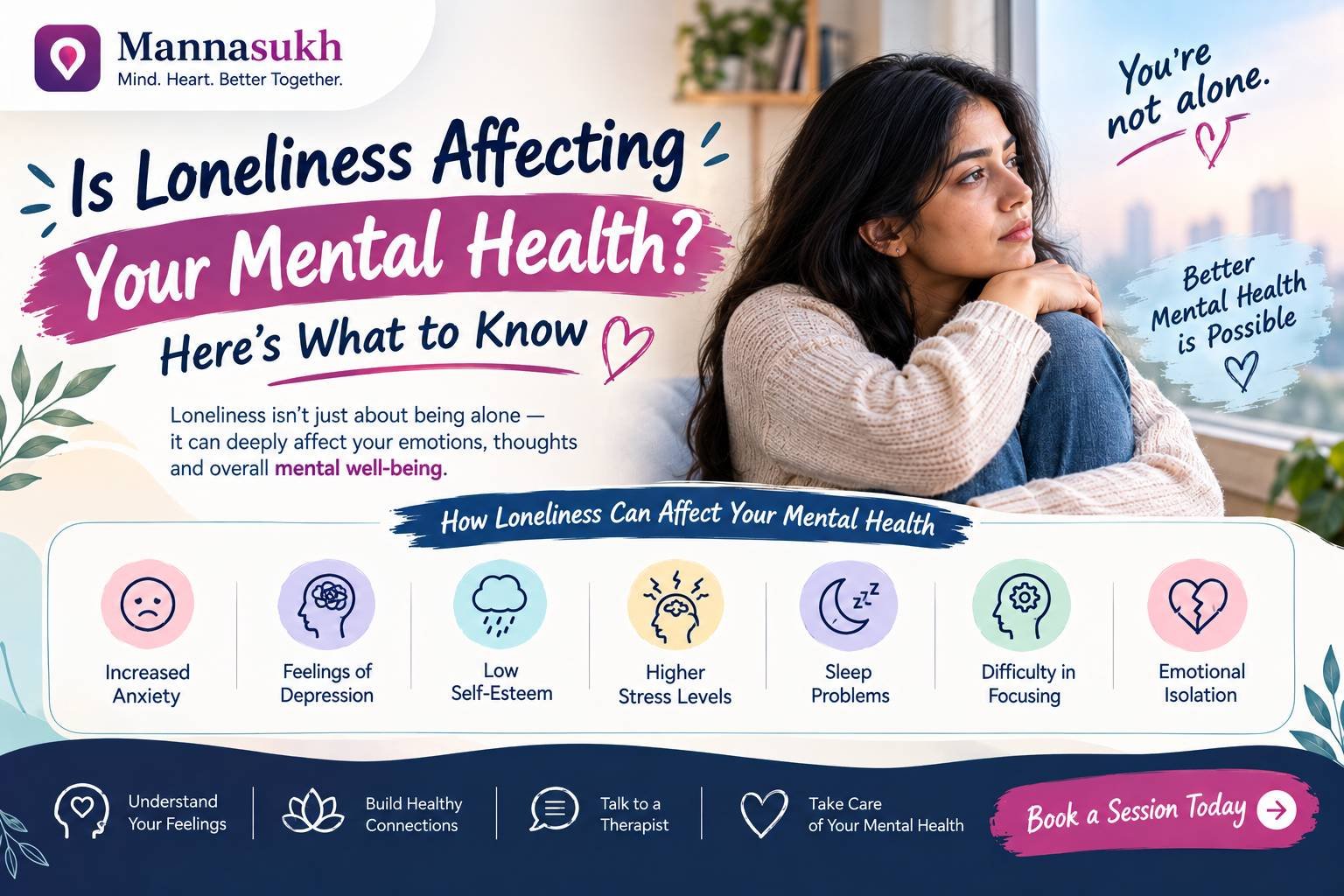
Is Loneliness Affecting Your Mental Health? Here's What to Know
Loneliness has quietly become one of the biggest health concerns of our time. It is not just about being alone. You can be surrounded by people at work, on social media, even at home, and still feel completely disconnected. That gap between the connection you crave and the connection you actually have is what mental health experts call loneliness, and it can affect your mind just as much as your mood.
If you have been feeling low, restless, or emotionally drained without knowing exactly why, loneliness might be playing a bigger role than you think. Let us look at how it affects your mental health and what actually helps.
What Loneliness Really Does to Your Mind
Loneliness is not a personality flaw or a sign of weakness. It is a natural signal, much like hunger or thirst, that tells you something important is missing. The problem starts when that signal does not go away.
When loneliness becomes long-term, it changes how your brain works. Studies have linked chronic loneliness to higher stress hormone levels, disturbed sleep, and a weaker immune system. Over time, this constant state of alertness wears down your emotional resilience, making it harder to cope with everyday stress.
Many people also start to withdraw further once loneliness sets in. It becomes a loop. You feel disconnected, so you pull back from people, which then makes the loneliness worse.
The Link Between Loneliness and Anxiety
Anxiety and loneliness often show up together, and one tends to feed the other. When you feel isolated, your mind starts overthinking social situations. You might worry about being judged, rejected, or misunderstood, which makes it even harder to reach out.
This creates a cycle where anxiety keeps you from connecting with people, and the lack of connection keeps the anxiety alive. Some common signs include a racing mind before social interactions, constant worry about what others think of you, and a tendency to cancel plans even when you want company.
Although it may not feel that way in the moment, these feelings can improve. Taking one small step at a time often makes it easier to reconnect with others. It usually starts with small, manageable steps rather than trying to fix everything at once.
How Can Loneliness Lead to Depression?
Depression and loneliness share a complicated relationship. Loneliness does not always cause depression, but it is one of the strongest risk factors for it, especially when it continues for months without change.
When someone feels persistently disconnected, their sense of purpose and self-worth can start to fade. Everyday tasks feel heavier. Motivation drops. Even activities that once brought joy can start to feel pointless. This is often how depression quietly builds up, not as a sudden collapse but as a slow erosion of energy and interest.
The important thing to remember is that depression linked to loneliness can be treated. The earlier you recognise what is happening, the sooner you can start getting the support you need.
Signs You Might Be Struggling More Than You Realize
Sometimes loneliness hides behind everyday tiredness or a busy schedule. Here are a few signs worth paying attention to.
You feel emotionally distant even when you are with friends or family
Your sleep pattern has become irregular or restless
You have lost interest in things you used to enjoy
You find yourself avoiding calls, messages, or social plans
You feel exhausted without any clear physical reason
You often feel misunderstood, even by people close to you
Small setbacks feel bigger than they should
If several of these sound familiar, it may be time to look more closely at what is going on beneath the surface.
How Therapy Can Help You Break the Cycle
Therapy is one of the most effective ways to deal with loneliness-related anxiety and depression. Talking to a therapist is more than simply sharing your feelings. It is about understanding what is driving them and learning practical ways to respond differently.
Cognitive behavioural therapy, for instance, helps people identify the negative thought loops that keep loneliness going. It teaches you how to challenge thoughts like " Nobody wants to talk to me or I will always feel this way, and replace them with more balanced ones.
Group therapy can also be surprisingly powerful. Sharing your experience with others who understand what you are going through can reduce the shame that often comes with loneliness. It reminds you that you are not the only one feeling this way, which can be a relief in itself.
If therapy feels like a big step right now, even talking to a counsellor once can help you understand what you are dealing with and what your next move should be.
Simple Ways to Feel Less Alone Starting Today
While professional support matters, small daily habits can also make a real difference.
Reach out to one person today, even with a short message. Connection does not have to be a big gesture.
Spend time outdoors. A short walk in daylight can genuinely improve your mood.
Limit passive scrolling. Watching other people's lives on social media often deepens loneliness instead of easing it.
Join something consistent, a class, a hobby group, or even a weekly walk with a neighbour. Regular contact builds a connection faster than occasional meetups.
Be honest with someone you trust about how you are feeling. Most people are more understanding than we expect.
You may not notice a big change after just one day, but small actions repeated over time often lead to stronger relationships and a greater sense of belonging.
Final Thoughts
Loneliness is common, but that does not mean it should be ignored. Left unaddressed, it can quietly affect your anxiety levels, your mood, and your overall mental health. It may take time, but loneliness can improve. Reaching out for support and making small, consistent efforts often leads to meaningful progress.
If loneliness has been affecting you for a while, consider reaching out to a therapist or counsellor. You do not have to deal with these feelings on your own. Reaching out for help is a sign that you are ready to take care of yourself, and that is something to be proud of.
Frequently Asked Questions
Can loneliness really cause anxiety or depression?
Yes. Chronic loneliness is a well-known risk factor for both anxiety and depression. It affects stress levels, sleep, and emotional resilience over time.
How do I know if I am lonely or just introverted?
Introverts enjoy solitude and feel recharged by it. Loneliness feels different; it comes with a sense of lack or disconnection, even when you are around people.
Is therapy necessary for loneliness, or can it go away on its own?
Mild loneliness can improve with better social habits, but if it has lasted for months and is affecting your mood or daily life, therapy can help you address it more effectively.
What is the fastest way to feel less lonely?
There is no instant fix, but reaching out to one person, spending time outdoors, and reducing passive social media use are simple steps that can help fairly quickly.