
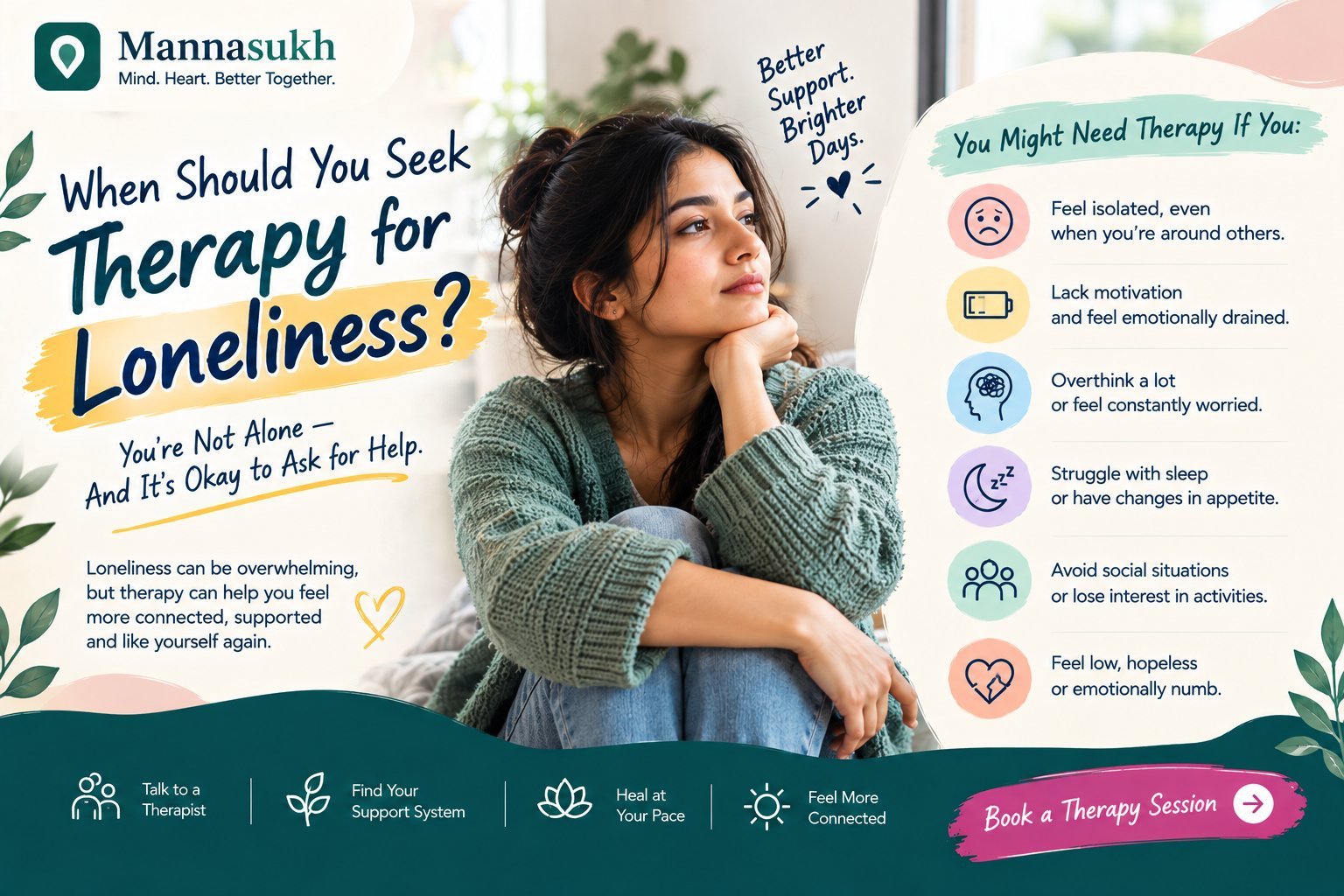
When Should You Seek Therapy for Loneliness?
Feeling lonely isn't always about being alone. You can spend time with friends, family, or colleagues and still feel like something is missing. These feelings often build slowly, so it's easy to ignore them or hope they'll go away on their own. But if loneliness has started affecting your sleep, your mood, your confidence, or your daily life, it may be time to consider therapy for loneliness.
You don't have to wait until everything feels overwhelming before asking for help. Therapy isn't just for people in crisis. It's for anyone who wants to understand what they're going through and find healthier ways to cope.
What Loneliness Really Does to You
Loneliness isn't just an emotion that comes and goes. When it sticks around for weeks or months, it starts changing how your brain processes stress. You may notice you're more irritable, more tired even after a full night's sleep, or less interested in things you used to enjoy. Some people eat more, some eat less. Some scroll on their phones for hours just to avoid the silence, only to feel worse afterward.
This is the part people rarely talk about. Chronic loneliness has been linked to higher stress hormone levels and even weaker immune response over time. It's not a weakness. It's your body reacting to a very real, very human need not being met.
The Signs It's Time to Seek Therapy for Loneliness
You don't need a checklist to know something's off, but here are a few patterns that usually mean it's worth reaching out to a psychologist for loneliness rather than waiting it out:
You have started avoiding social plans even when you used to enjoy them. You feel disconnected from people even when you are physically present with them. Small tasks feel heavier than they should. You find yourself comparing your life to others online and feeling worse every time. You've stopped reaching out to friends first and are waiting for them to text you instead. Sleep has become inconsistent, either too much or too little. You feel like you are carrying something you can't quite explain to the people around you.
If two or three of these sound familiar, it's not something to push aside. It's a sign your mind is asking for support.
When Loneliness Becomes a Deeper Problem
Sometimes loneliness on its own turns into something bigger if it's left unaddressed. Watch for these warning signs, which usually mean therapy shouldn't wait:
You feel a persistent sense of emptiness that doesn't lift even during good days
You've withdrawn from almost all social contact, including close family
Your work or studies are visibly slipping because you can't focus
You've started relying on alcohol, food, or screens to numb the feeling
You feel hopeless about things ever changing
You've had thoughts of not wanting to be here anymore
If that last point applies to you, please don't sit with it alone. Reach out to a mental health professional or a crisis helpline right away. Loneliness can be treated, and you don't have to figure this out by yourself.
How Therapy Helps With Loneliness
Many people imagine therapy as simply talking about their feelings. In reality, it is much more practical than that. A psychologist helps you understand why loneliness has stayed with you and works with you to develop healthier ways to cope and reconnect with others. For some people, loneliness comes from social anxiety that makes reaching out feel terrifying. For others, it's rooted in past relationships where trust broke down. And for some, it's simply a life transition, such as moving to a new city, going through a breakup, retiring, or becoming a parent, that quietly cuts off the support system they used to rely on.
Counselling gives you a space to unpack all of that without judgment. Your therapist can help you build small, realistic steps to reconnect, whether that's joining a group, repairing an old friendship, or simply learning how to sit with your own company without it feeling so heavy. Cognitive behavioural techniques are often used here, helping you notice the thoughts that keep you isolated and gently challenge them.
For many people, therapy is the first place where they feel heard without worrying about being judged or having to pretend everything is fine. That experience alone can make a meaningful difference.
Is Online Therapy a Good Option for Loneliness?
Yes, and for many people, it works even better than in-person sessions. If stepping out of the house feels difficult when you're already withdrawn, online therapy makes getting help much easier because you don't have to travel or worry about walking into a clinic. You can talk to a licensed therapist from your bedroom, during a lunch break, or late at night when the loneliness feels the loudest.
Online therapy platforms today connect you with qualified psychologists who specialise in loneliness, anxiety, and social disconnection. Sessions are usually just as effective as face-to-face ones, and many people find it easier to open up through a screen before they're ready to do it in person. If cost or location has been holding you back, this is worth looking into.
What to Expect From Your First Session
The first session is usually just a conversation. Your therapist will ask about what's been going on, how long you have felt this way, and what your daily life looks like. There's no pressure to have the right words. There's no expectation that you'll know exactly how to describe what you're feeling. Most people feel nervous before their first appointment, and that's completely normal. Your therapist will help you make sense of things one step at a time.
From there, most therapists build a plan tailored to you, whether that's weekly sessions, specific coping tools, or a combination of individual and group support.
Conclusion
There's no reason to wait until loneliness starts taking over your daily life before asking for help. If these feelings have been staying with you for a while, therapy for loneliness can help you understand what's behind them and find healthier ways to cope.
Taking the first step isn't always easy, but it can lead to stronger relationships, better emotional well-being, and a renewed sense of connection. You don't have to go through it alone.