
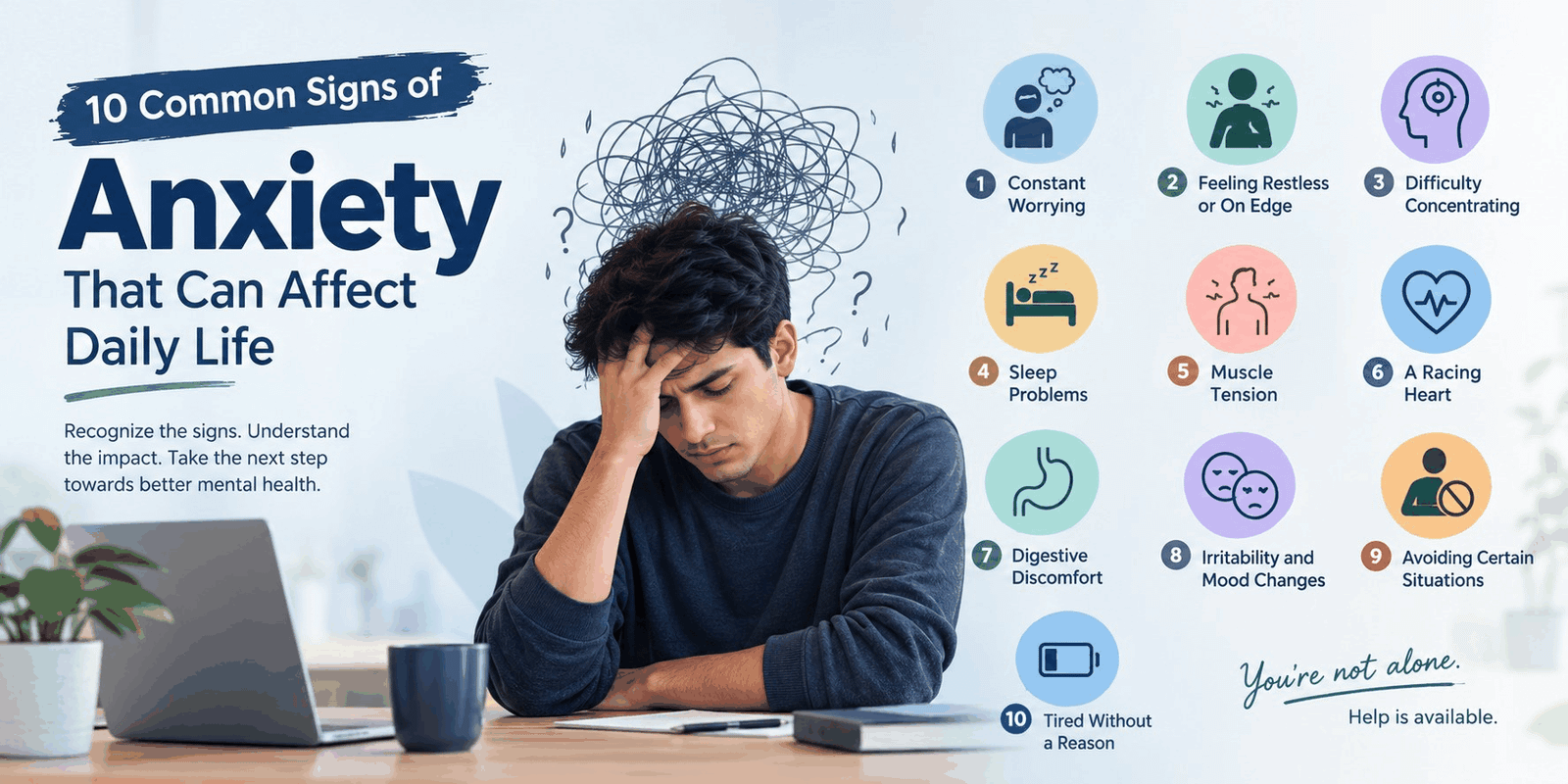
1. Constant Worrying
The most common symptom of anxiety is over-worrying. Someone might continually consider work, family duties, money, or future occurrences.
Sometimes even when there's no immediate issue, the mind can think about potential bad things. This may make it challenging to rest and be in the here and now.
2. Feeling Restless or On Edge
Anxiety may lead to a constant state of unease. You might not be able to sit comfortably, get impatient quickly, or not be able to relax even during a quiet period.
This restlessness can make normal activities seem more difficult than they are. It can also cause problems with focus while working or talking.
3. Difficulty Concentrating
Worrying about things can make it difficult to pay attention to other activities. You may read the same sentence more than once, not remember a word or line of what someone has said, or have trouble finishing simple tasks.
This symptom may lead to decreased productivity and to a sense of overwhelming responsibilities.
4. Sleep Problems
A trouble sleeping cycle can affect anxiety and vice versa. Fears or concerns at bedtime can make it more difficult to fall asleep and can keep you awake at night.
However, some people feel tired after getting adequate sleep.Others wake up feeling tired after having a proper night's sleep. This poor sleep can then lead to irritability, fatigue and lack of concentration on the next day.
5. Muscle Tension
Anxiety can have an impact outside of the mind and body. It can also cause physical tension.
You might experience tight shoulders, stiff neck, clenched jaw and regular headaches. These symptoms can be more apparent during stressful times.
But if it is chronic pain or tension in the muscles, there could be other reasons to consider, so it doesn't necessarily mean anxiety.
6. A Racing Heart
The body's stress response can lead to elevated heart rates during times of anxiety. You may see your heart rate increase, pulse stronger or a fluttering sensation.
These symptoms may happen when a person is stressed or when he or she is very afraid. A racing heart may also have medical etiologies, though. If it happens, with chest pain, severe shortness of breath or fainting, get urgent medical help.
7. Digestive Discomfort
The brain and digestive system communicate closely and one reason for that is because stress affects the stomach.
When anxious, some people get upset stomach, feel sick, loose their appetite or have diarrhoea. Symptoms can be more prominent before a significant meeting, challenging discussion, or new experience.
If digestive issues do not go away, consult with a health care provider.
8. Irritability and mood changes
Feeling anxious can make dealing with daily aggravations more difficult. Minor problems may seem like they are really stressful and you may feel impatient or emotional.
Others also find it hard to shut down after a busy day. These changes may impact your ability to communicate with family, friends or co-workers.
9. Avoiding Certain Situations
One other potential sign of anxiety is avoidance. A person can cancel plans over and over, refuse meeting contacts, put off important tasks or skip circumstances that cause concern.
Avoidance can offer short-term relief but can also become a bit of a habit which could end up affecting work, relationships and personal goals.
Talking with a mental health expert can help to make sense of your fears if they are affecting your day-to-day life.
10. Tired without a reason
Owning up to your concerns can be mentally draining. Low energy can also be caused by physical tension, sleep disturbances and chronic stress.
Everyday activities may be difficult or may make them feel tired after relatively light activity. Fatigue can come in many forms, though, such as sleep difficulties and health issues.
If you are feeling tired or it is interfering with your daily life, talk to a health care professional.
When is it Time to Get Help for Anxiety?
Everyone gets anxious every now and then. When symptoms happen often, they feel hard to suppress or seem to be affecting work, relationships, sleeping or other daily activities, however, professional assistance may be helpful.
If you have symptoms, a healthcare provider will evaluate them, and they will work on finding a treatment that works for you. Assistance can be in the form of psychological therapy, lifestyle modification, or drug which is prescribed by a qualified clinician, depending on the person's needs.
Some other strategies for easing daily stress include setting a routine, doing low-intensity exercise, breathing slowly and talking to a trusted person. These strategies are not meant to be a substitute for professional care for persistent or severe symptoms.
Conclusion
Identifying each of the 10 anxiety symptoms can help you become more understanding about the ways anxiety can impact your body and mind. Symptoms may be experienced in a variety of ways, including worry, poor sleep, muscle tension, avoidance, and more.
If you notice these symptoms, it doesn't necessarily mean you have an anxiety disorder. Notice the rate of occurrence and if they are disrupting your daily life. When anxiety is overwhelming, it's a healthy decision to seek help from a professional