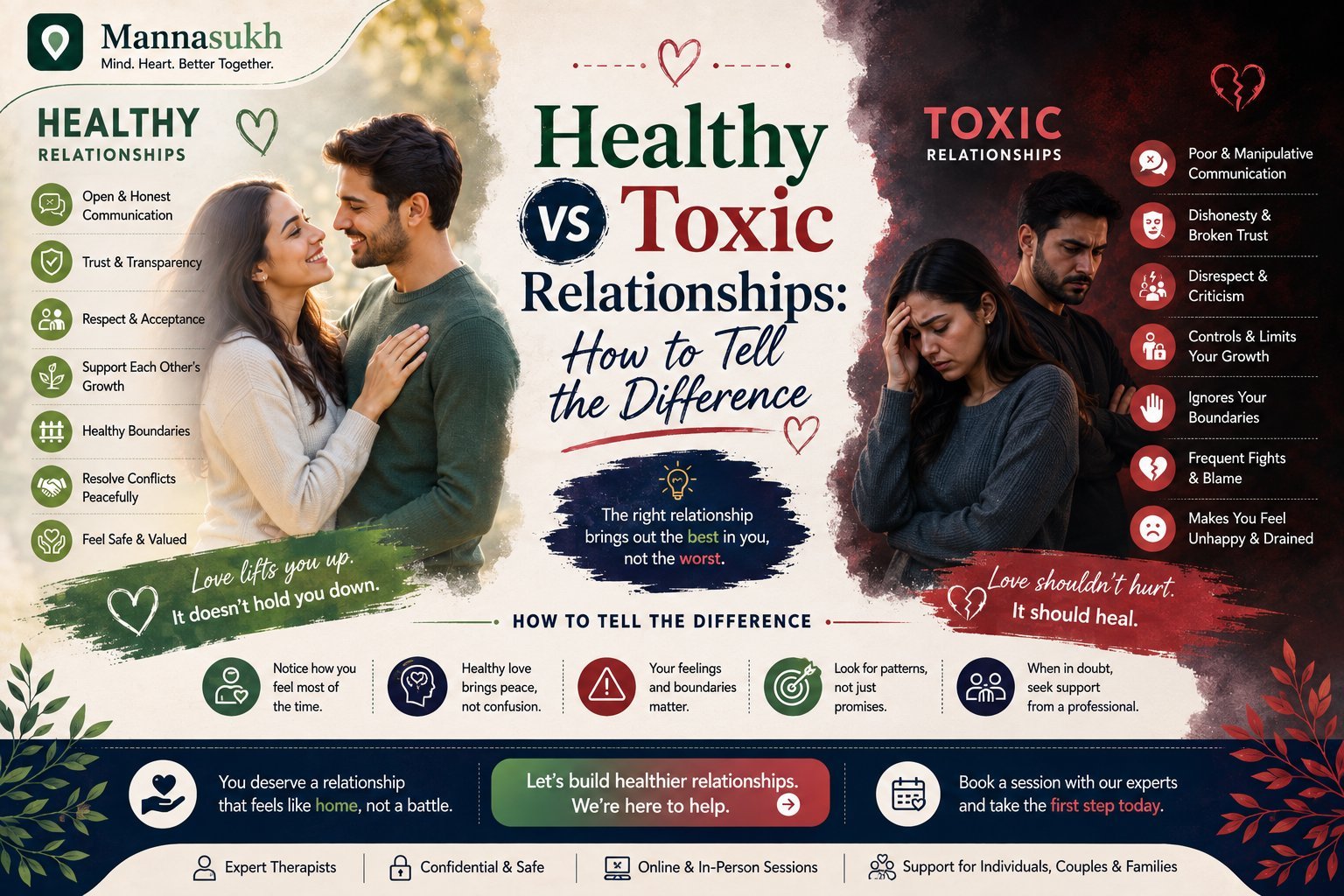
All relationships have their good and bad times. That part is normal. When the difficult moments begin to outweigh the good ones, or you start feeling less confident and more anxious around your partner, it may be a sign that something isn't right. This is where it gets confusing for many people to tell the difference between a healthy vs toxic relationship. Many couples live in a bad pattern for years without realizing it, since love and unhealthy behaviour can coexist in the same relationship. Once you understand the difference between a healthy vs toxic relationship, those patterns become much easier to recognize.
A healthy relationship is built on trust, respect, honest communication, and mutual support. A toxic relationship, on the other hand, often involves constant criticism, control, fear, blame, or emotional exhaustion. While every relationship has disagreements, healthy couples resolve them with respect, whereas toxic patterns leave one or both partners feeling unhappy, unheard, or emotionally drained.
Understanding the Difference Between Healthy and Toxic Relationships
The difference between a healthy vs toxic relationship is not always obvious. Many unhealthy relationships begin with love, attention, and excitement, making the warning signs difficult to notice at first. Over time, the way partners handle disagreements, stress, and everyday challenges reveals whether the relationship is healthy or becoming toxic.
Both individuals can disagree without fear in a healthy relationship. You can tell your partner how you feel, even if they do not agree. In a healthy relationship, it is possible to disagree without blaming, discounting, or punishing. Over time, one partner may start to stay quiet or hide their feelings to avoid conflict. One of the most obvious indicators of a bad relationship is the loss of confidence, without anyone saying so outright.
Common Toxic Relationship Signs You Might Be Missing
Some signs of a toxic relationship are easy to spot, while others are much harder to notice, such as yelling or control. Some are not even loud enough to be noticed until months have passed. These are the most frequently seen symptoms.
Your partner starts controlling who you can see or talk to. It may seem like jealousy at first, but over time, it can leave you isolated from friends and family.
Feel like walking on eggshells. Make sure you have a plan for what you're going to say before you say it, so you don't start an argument.
An apology does not necessarily bring about change. Your partner apologises, but the same behavior keeps happening again within days or weeks.
You often feel responsible for problems you didn't cause. Every time you say something, you come off as apologetic, even if you aren't.
When Toxic Behavior Turns Into Emotional Abuse
Not all toxic relationships become emotional abuse relationships, but many of them do. Emotional abuse occurs when one partner tries to control the other person through fear, guilt, or shame, affecting their thinking, choices, and self-worth. It is often much more subtle than what you see in movies. It often happens through repeated criticism, guilt, or manipulation over time.
What Emotional Abuse Actually Looks Like
Emotional abuse can involve criticizing you all the time, as if it were a joke, threatening to get out of the house every time it doesn't go your way, or making you question your own memories of what has happened. This final one is a thing with a name: gaslighting. When you're not sure if you're overreacting, even when you have a feeling that it is, it's important to take those feelings seriously.
One of the toughest things about emotional abuse is that it's often disguised as love. Your partner may apologise, buy gifts, or vow to change immediately after hurting you. This cycle prolongs people's suffering far longer than any physical injury could, since the good moments provide evidence that things will improve. Typically, this is where a healthy/ unhealthy relationship boundary is crossed, but neither partner is fully aware of it.
How Relationship Counselling Can Help You Move Forward
If both partners are committed to making the relationship work, relationship counselling is effective. A skilled counsellor helps you identify healthy and unhelpful patterns and does not take sides in all the fights. An outside perspective can help identify unhealthy patterns that are difficult to notice from within the relationship.
When the relationship is characterised by emotional abuse, most often, individual therapy is a more secure option than couples counselling. counselling cannot resolve a communication issue in the case of abuse. A trained therapist can work with you to develop a safety plan and determine what you do next at your own speed.
Relationship counselling is not only for relationships in crisis. Even people who have a mostly healthy relationship use counselling to develop better communication and to detect small, growing, toxic patterns. For many couples, a couple of honest sessions can be sufficient to make the distinction between a healthy vs toxic relationship clear.
Can a Toxic Relationship Become Healthy?
Yes, but only if both partners are willing to acknowledge unhealthy behaviours, communicate honestly, and make consistent efforts to change. In relationships involving emotional abuse or controlling behaviour, professional support and personal safety should always come first.
Frequently Asked Questions
- How to know if a Relationship is Healthy vs Toxic?
Pay attention to how you feel after spending time with your partner. A healthy relationship usually leaves you feeling supported and respected, while a toxic relationship often leaves you feeling anxious, stressed, or emotionally drained.
Is there a way to turn this toxic relationship into a healthy one?
Yes, but only when both individuals are aware of the pattern and make a conscious effort to change it, frequently with the assistance of relationship counselling.
What are the first red flags of a bad relationship?
It's typically when there's constant jealousy, subtle put-downs, and pressure to cut off friends that it first becomes apparent.
Is emotional abuse the same as a toxic relationship?
Not always. Every emotionally abusive relationship is toxic, but not every toxic relationship reaches the level of emotional abuse.
Does relationship counselling work if only one partner wants to attend?
It helps less than joint counselling, but individual therapy can still provide clarity and support as you decide what to do next.
Final Thoughts
Understanding the difference between a healthy vs toxic relationship helps you recognize patterns that may have gone unnoticed. No relationship is perfect, but a healthy one should make you feel respected, valued, and emotionally safe. If you notice ongoing signs of a toxic relationship or emotional abuse, seeking professional support is a positive step towards protecting your well-being and building healthier relationships in the future.