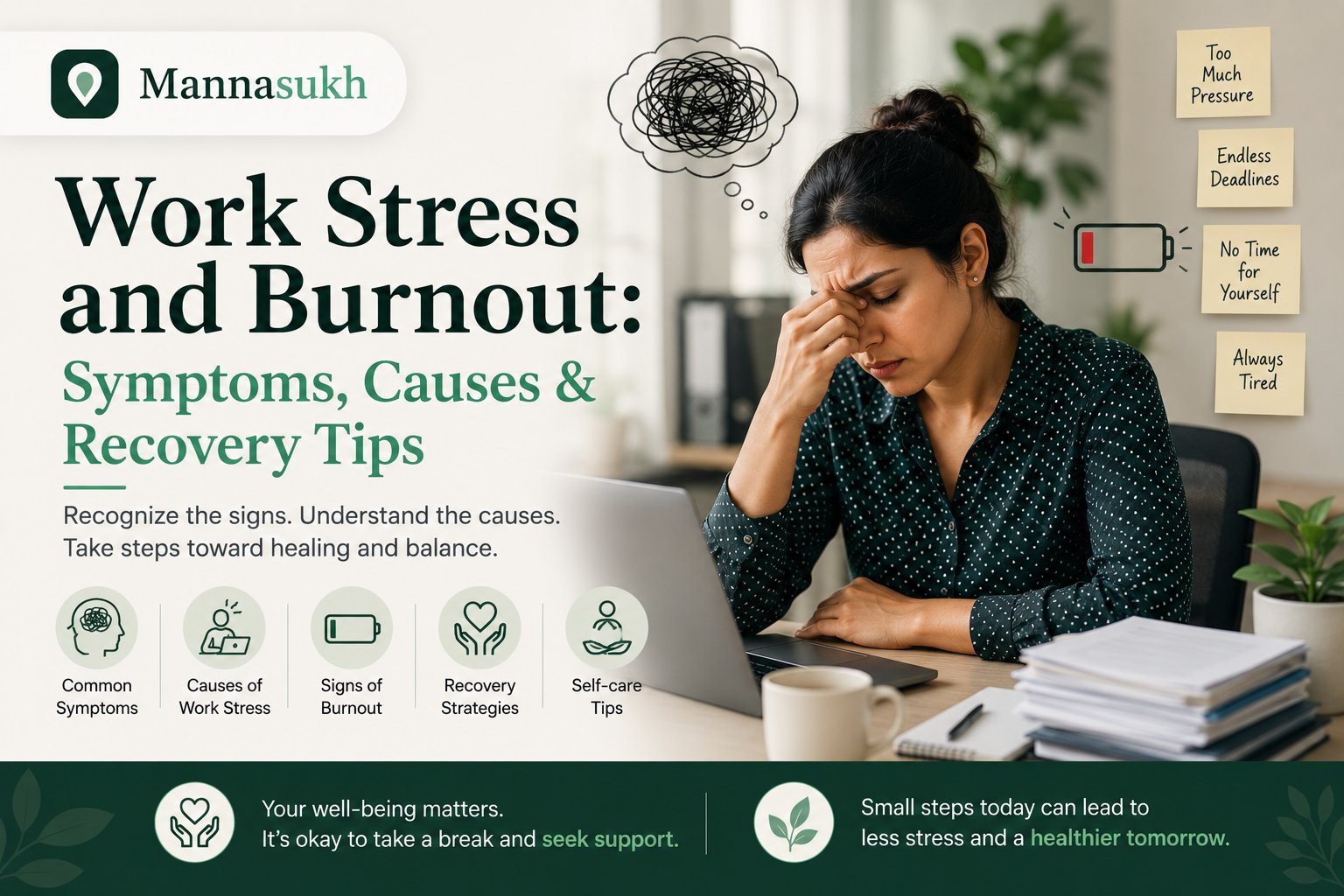
Work Stress and Burnout: Symptoms, Causes & Recovery Tips
Modern workplaces are more demanding than ever before. The stress in the workplace has become a big issue in all industries, due to tight deadlines, rising workloads, long hours of work, constant access to digital devices, employment uncertainty, and the pressure to work at a high level. Stress is a normal aspect of work life, but when stress is not managed, it can become chronic and ultimately cause work burnout, a condition that is characterized by physical, emotional and mental fatigue that has a significant impact on well-being and job performance.
Many professionals often confuse burnout with simply being tired after a hectic week. Burnout is more than just tiredness, though. It slowly drains motivation, decreases productivity, affects relationships and can cause severe mental health issues like anxiety and depression if not dealt with.
There is good news, however: burnout is preventable and treatable. Early identification of signs and symptoms and a proactive attitude to recovery can restore energy, enhance emotional stability and establish a healthier working relationship.
This detailed guide will discuss the common signs of burnout, explore why stress can occur at work, how it is linked to the well-being of employees, and provide practical stress management tips to help prevent burnout and promote recovery.
What Is Burnout?
Burnout is the result of years of chronic physical, emotional and mental stress, especially at work. Burnout is an occupational phenomenon caused by chronic workplace stress that is not properly managed, according to the World Health Organization (WHO).
Burnout differs from regular stress, which may improve after rest or vacation, in that it causes a person to feel exhausted, dispirited, and unable to function like they normally would. Even everyday activities can become too much and many lose the meaning of life or the pleasure that they once felt for work.
Industry professionals such as healthcare workers, teachers, corporate employees, entrepreneurs, caregivers, customer service representatives and remote workers can also suffer from burnout. Prolonged stress with insufficient recovery is a risk for anyone.
Work Stress vs Burnout: Understanding the Difference
Work stress and burnout are closely related, but different concepts.
Workplace stress typically stems from pressure from deadlines, responsibilities and/or short-term issues. Stressed individuals tend to stay 'on track' and think that doing things will somehow take the edge off the stress.
Burnout occurs when chronic stress persists over a longer period of time, without adequate recovery. Rather than being motivated, people start to feel emotionally detached, drained and despondent. Productivity suffers, enthusiasm fades, and even mundane tasks become challenging.
In plain language, stress is when it's "too much", and burnout is when it's "nothing left. When it's "too much", it's stress and when it's "nothing left," it's burnout!
What is the cause of workplace burnout?
A single poor day at the job is not typically a cause of burnout. Rather, it typically is the result of sustained work environments and personal/emotional issues.
The most typical reasons for this include:
Overworked and unrealistic timeframes.
Excessive hours worked without breaks.
Lack of control over work responsibilities
Very high pressure to perform to standards.
Poor work-life balance
Job insecurity
Toxic workplace culture
Unsupportive management
Bullying or harassment at work
Not enough recognition or appreciation
Unclear job expectations
Stressed by work, economic concerns
Outside the workplace, family responsibilities, health concerns, financial pressure, and personal challenges can further increase the risk of burnout.
15 Burnout Symptoms You Should Never Ignore
Burnout is a slow process and early signs can be easily overlooked. If you notice some of these signs early, you can take steps to prevent them from getting worse.
1. Constant Physical and Mental Exhaustion
Fatigue is one of the first signs of burnout and can get worse after a weekend or a good night's sleep. Before the working day even starts, you may feel tired.
2. Loss of Motivation
Once-fulfilling tasks can now seem like responsibilities. It might be difficult to get motivated for even projects that you used to love doing.
3. Difficulty Concentrating
Burnout can impact attention, memory and decision making. A lot of people report having 'brain fog' where it feels hard to focus, remember important information and problem-solve.
4. Increased Irritability
Things that are not working well could lead to frustration or meltdowns. May feel less tolerant with colleagues, family or clients than usual.
5. Emotional Detachment From Work
People who suffer from burnout start to feel a disconnect with their work, their coworkers, and/or their customers. This emotional separation is a protective mechanism for the mind to react to the stress.
6. Declining Productivity
You can work hard, but still not get as much done as you did before due to tiredness which decreases concentration, creativity and efficiency.
7. Regular Headaches and muscle tension
Stress can be chronic and/or manifest itself physically. Burnout frequently manifests as headaches, neck pain, shoulder tension and back pain as well as digestive issues.
8. Sleep Problems
When you suffer from burnout it is often the quality of your sleep that is affected. Some people are unable to fall asleep due to their racing thoughts, others wake up many times during the night or sleep restlessly.
9. Before Work Job Anxiety
Another significant indicator is ongoing job anxiety. Your nervousness or dread of Sunday evening may be accompanied by a feeling of nausea or a racing heartbeat before beginning your workday, or you may dread opening your work e-mail.
10. Being cynical or negative
Burnout can alter the mindset of people regarding their work. People might feel more negative, cynical, and less emotionally involved with their jobs.
11. Reduced Confidence
You might start to think that you're not good enough, that you're not doing enough, that you're not learning enough, etc., even though you work hard all the time.
12. Increased Absenteeism
It takes a toll on the mind to avoid working or take too many sick days, or be mentally checked out during meetings, which could be signs of emotional exhaustion—and not just lack of motivation.
13. Struggling with Work and Personal Life Balance
Burnout frequently manifests in daily life. You might find it difficult to enjoy hobbies, spend time with friends or family or relax as work keeps you preoccupied.
14. Feeling Trapped
People in the midst of burnout often find themselves in a situation where they have a strong desire to rest but can not do so due to financial obligations, workload or fear of losing out.
15. Loss of joy outside work
Burnout eventually spills out into the rest of life. Things that used to make you happy are no longer fun, and you feel drained in all aspects of your life.
The impact of Burnout on Employee Mental Health
Burnout is not just a job problem; it has a major impact on employees' mental health.
If it is not addressed, chronic burnout can lead to:
Anxiety disorders
Depression
Panic attacks
Emotional exhaustion
Low self-esteem
Sleep disorders
Relationship difficulties
Substance misuse
Reduced resilience
Higher risk of physical sickness.
Workplace burnout is linked to mental health, and therefore, workplace burnout is good for employees and organizations.
Who is at greatest risk?
While anyone can burn out, some professions are at higher risk, such as:
Healthcare professionals
Teachers
IT professionals
Customer support staff
Entrepreneurs
Caregivers
HR professionals
Corporate executives
Emergency responders
Freelancers balancing multiple clients
Other vulnerable people include perfectionists, high achievers and those who have difficulty setting limits.
Practical Recovery Tips for Burnout
It takes time to heal from burnout, and there are steps you can take consistently which will help you find your well-being.
1. Acknowledge That You're Burned Out
A key first step towards recovery is to acknowledge that what you're going through is more than just normal stress. Let go of judgment of self and find support.
2. Set Healthy Work Boundaries
For instance, try to make a distinction between work and personal life as far as possible. Don't read emails late at night, set boundaries for work time and be respectful.
3. Make rest without guilt a priority
Recovery will be achieved through proper rest – not just falling asleep after an overly active day. Set aside sleep, hobbies, relaxation and rejuvenation time.
4. Manage Stress to be Effective
Some healthy ways to manage stress lessen the physical and emotional effects of chronic stress.
Helpful strategies include:
Mindfulness meditation
Deep breathing exercises
Regular physical activity
Journaling
Yoga
Spending time outdoors
Progressive muscle relaxation
Over time, practicing stress reduction activities for just 15-20 minutes a day can increase resilience.
5. Reevaluate Your Workload
If possible, talk to your manager or supervisor about workload issues. Delegating, prioritizing and declining unrealistic expectations are all key elements in avoiding burnout.
6. Improve Your Support System
During tough times, it helps to have trusted friends, family members, colleagues, and mentors to talk with openly, which gets rid of the emotional isolation.
7. Take Regular Breaks
Short breaks can enhance focus, creativity and emotional regulation during the day. Taking breaks, even from the work desk for a few moments, can help to defuse stress.
8. Seek Professional Support
If the burnout has been a significant impact on your emotional health, relationship, sleep patterns or ability to function, it can be helpful to discuss the situation with a psychologist or therapist to identify underlying issues and to learn some healthy coping mechanisms.
Can Therapy Help With Burnout?
Absolutely.
Therapy helps individuals:
Understand factors that contribute to burnout.
Deal with stress at work in a better way.
Develop healthy boundaries.
Improve emotional resilience.
Handle anxiety or depression related to burnout.
Improve Work-life balance.
Re-establish confidence and motivation.
Therapy is found to not only help with mental wellness but also productivity, communication, and life satisfaction by many professionals.
Preventing Burnout Before It Starts
It is always better to prevent problems than to be able to recover from them.
Here are some healthy habits to avoid burnout:
Maintaining realistic expectations.
Regularly taking annual leave.
Prioritizing sleep.
Exercising consistently.
Building supportive relationships.
Practicing mindfulness.
Setting work boundaries.
Having snack breaks from the office.
Seeking assistance when necessary.
Frequently checking your workload.
As well, organizations are important in fostering healthy workplace cultures, supporting employee wellness, and in providing opportunities for open discussions about mental health.
Frequently Asked Questions (FAQs)
What is the difference between stress and burn out?
Stress is typically characterized by a feeling of being overwhelmed but motivated to tackle challenges. Burnout occurs when stress is ongoing and unmanaged and can happen when a person experiences emotional exhaustion, withdrawal, loss of interest and drive, and a decrease in performance.
How do you know if you are experiencing burnout?
Burnout is a gradual process, and some of the initial signs are constant fatigue, irritability, trouble focusing, sleeplessness, decreased motivation, emotional exhaustion, and growing work-related dread.
Do burnt out people experience anxiety?
Yes. Job anxiety, worrying too much, experiencing panic symptoms, and other mental health issues are common symptoms of chronic burnout. Early intervention can minimize the likelihood of the development of more severe psychological disorders.
What is the duration of Burnout Recovery?
Recovery will depend on the severity, the work environment, individual factors and support. For some, it will take several months of lifestyle changes and professional help to feel better, others will feel the benefits within a few weeks.
Is therapy a good solution to work stress?
Yes. Therapy is very effective for work stress management, coping, setting healthy boundaries, perfectionism and to prevent worsening of burnout.
When do I need professional assistance?
It is important to seek professional mental health help if self-care measures fail to help you for weeks, if you feel burned out and affected in your work, relationships, sleep quality, physical health, or emotional well-being.
Final Thoughts
Burnout is not a weakness, laziness or lack of resilience; it is often due to long exposure to unmanaged stress. Burnout can impact all areas of your life, both physically, emotionally, socially and professionally.
Thankfully, recovery is a possibility. Through being aware of the signs of burnout, the practice of good stress management, having better boundaries with work, and asking for professional help if needed, you can restore your energy, rebuild emotional strength, and develop a more healthy relationship with work.
It's important to keep in mind that your career is vital, but so are your mental well-being and your health.
Make the first step toward recovery
When workplace stress, job anxiety or job burnout begins to impact your life, don't wait until you are completely overwhelmed.
Make an appointment with a trained psychologist or mental health practitioner today! With the help of a professional, you can understand where your burnout is coming from, learn how to have a healthier response, how to manage your work-life balance, and find a better way to manage your emotions. Taking care of your own mental health is not only one of the best investments you can make today for your future but also one of the most important ones you can make.